Sewage Cleanup in Chapel Hill, NC
A sewage backup is Category 3 the moment it happens. The Chapel Hill sewage cleanup crew contains it, removes what it touched and treats and dries the structure.
(888) 578-4720Get a Chapel Hill pro on the phone about sewage cleanup- Containment and HEPA
- EPA-registered antimicrobial
- 24/7 dispatch
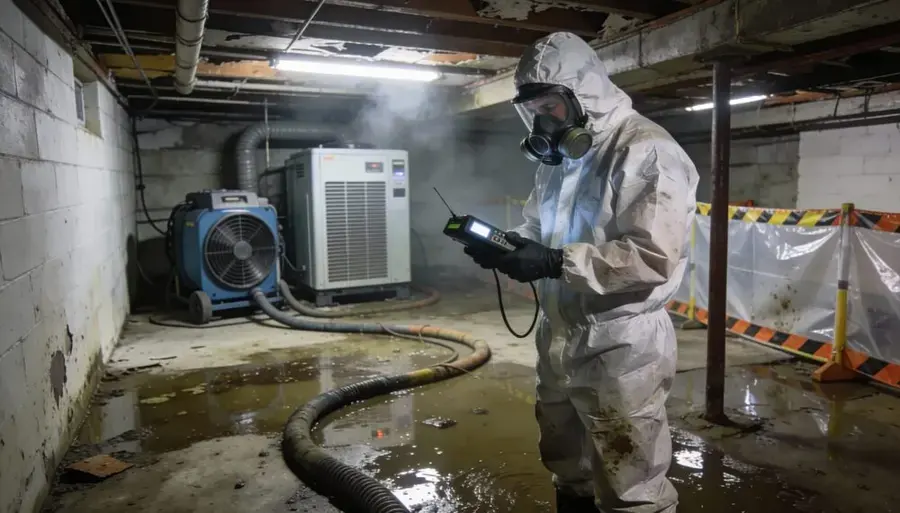
What to do first about sewage cleanup in Chapel Hill
- 1
Stop using water
Do not flush, run the washer or use sinks. Every drain adds to the backup.
- 2
Keep everyone out
Close the door to the area and keep children and pets away.
- 3
Power off if safe
If sewage reached outlets or equipment, switch off those circuits at a dry panel.
- 4
Call for Category 3 cleanup
Photograph the area from a safe spot and call for protected cleanup.
How sewage cleanup is handled in Chapel Hill, NC
Sewage adds containment, removal and antimicrobial treatment to the four steps. The drying goal does not change.
- 1
Map
The tech who does the walkthrough maps moisture with pinless meters and thermal imaging before any equipment goes down.
- 2
Extract
The extraction crew pulls standing water with truck-mounted extraction, so the water leaves the house instead of moving to the next room.
- 3
Dry
The drying team sets air movers to each room's evaporation load and runs LGR dehumidifiers, or desiccants on Class 4 materials.
- 4
Verify
Crews record readings every day and pull equipment only when wet materials sit within 2 to 4 points of a dry reference.
What does sewage and black water cleanup cost in Chapel Hill, NC?
In Chapel Hill, NC, sewage cleanup typically runs $2,000 to $10,000 or more, depending on how much area the backup covered, how much drywall, flooring and insulation has to be removed, whether it reached a finished basement, and how many days of drying follow.
Bathroom or small area
$2,000 to $3,500
- Containment and PPE
- Material removal
- Antimicrobial treatment
Basement or several rooms
$3,500 to $7,000
- Carpet and drywall removal
- HEPA air scrubbers
- Structural drying
Large or finished level
$7,000 to $10,000+
- Full Category 3 protocol
- Extended drying
- Claim documentation
Ranges move with the water category, the square footage, the material class and how fast drying started. For a planning number, try the Chapel Hill water damage cost calculator.
Sewage backups in Chapel Hill often start outside the house. Older neighborhoods still have clay or cast iron sewer laterals, and the big oaks and willow roots that shade those streets grow into the joints until the line breaks or clogs. Heavy rain can also overload lines and push water back up through a basement floor drain or a low toilet. Either way, the water that comes up is Category 3.
Why sewage is handled differently
Sewage carries bacteria, viruses and other contaminants. The IICRC S500 standard treats it as Category 3 the moment it happens, and porous materials it touched get removed, not dried.
- Workers wear protective suits, gloves, boots and respirators
- Containment with plastic sheeting keeps the contamination in the affected area
- HEPA air scrubbers clean the air during the work
- Carpet, pad, drywall and insulation touched by sewage are removed and bagged
- Hard surfaces are cleaned and treated with an EPA-registered antimicrobial at its label dwell time
Keep people and pets out
Do not try to clean sewage with household cleaners and a mop. Keep children, pets and anyone with a weak immune system away from the area until it has been cleaned and treated.
After the removal
Once contaminated materials are out and surfaces are treated, the structure is dried like any other loss: air movers, LGR dehumidifiers and daily readings until the framing and remaining materials reach the drying goal. The sewer line repair itself is plumbing work, often a camera inspection and a lateral repair or replacement.
OSHA's flood cleanup guidance explains protective gear for contaminated water, and Ready.gov covers flood water health risks. For flood water from outside, see creek flood cleanup, and for water in the lower level, basement flooding cleanup.
Where the sewage cleanup crews work
The Chapel Hill restoration crew covers the whole town and Carrboro, from Franklin Street, Northside and Glen Lennox to Timberlyne, Southern Village, Meadowmont and Governors Club, across ZIP codes 27514, 27516 and 27517.
See every neighborhood and ZIP codeRelated water damage services in Chapel Hill
Sewage and Black Water Cleanup questions from Chapel Hill homeowners
Straight answers about sewage cleanup in Chapel Hill and Carrboro.
Is sewage backup really dangerous?
Yes. Sewage carries bacteria and viruses. It is treated as Category 3 water, and cleanup uses protective gear, containment and removal of porous materials.
Can carpet be cleaned after a sewage backup?
No. Carpet and pad touched by sewage are removed and replaced. Hard surfaces like tile and concrete are cleaned and treated.
What causes sewage backups in Chapel Hill?
Tree roots breaking into older clay or cast iron laterals, grease and wipes clogging the line, and heavy rain overloading the system are the most common causes.
Who fixes the sewer line?
A plumber inspects the line, usually with a camera, and repairs or replaces the damaged section. The cleanup crew handles the contaminated water and materials inside.
Is sewage backup covered by insurance?
Sewer backup coverage is often a separate endorsement on a homeowners policy. Coverage depends on your policy, so it is worth checking with your own insurer.
How long does sewage cleanup take?
Removal and treatment usually take a day or two, and drying follows for three to five days. Equipment stays until the readings reach the drying goal.
Sewage and Black Water Cleanup in Chapel Hill? Get the drying started today.
Every hour of standing water pushes it deeper into subfloor, drywall and framing. The Chapel Hill drying team works around the clock.