Water Heater Failure Cleanup in Chapel Hill, NC
A failed water heater keeps refilling until the cold supply is shut. The Chapel Hill restoration team extracts the water and dries the floors and walls around it.
(888) 578-4720Get a Chapel Hill pro on the phone about water heater failure cleanup- Subfloor drying
- Daily moisture readings
- 24/7 dispatch
What to do first about water heater failure cleanup in Chapel Hill
- 1
Close the cold supply valve
The valve on the cold line at the top of the tank stops it refilling. If it will not turn, close the main.
- 2
Turn off power or gas
Switch off the breaker for an electric heater, or turn the gas control to off.
- 3
Keep clear of hot water
Water from the tank can be scalding. Let it cool before handling anything wet.
- 4
Photograph and call
Photograph the tank, the label and the wet areas, then call for extraction.
How water heater failure cleanup is handled in Chapel Hill, NC
A water heater loss follows the same four steps as every job, with extra checks on the ceiling below attic and upstairs tanks.
- 1
Map
The tech who does the walkthrough maps moisture with pinless meters and thermal imaging before any equipment goes down.
- 2
Extract
The extraction crew pulls standing water with truck-mounted extraction, so the water leaves the house instead of moving to the next room.
- 3
Dry
The drying team sets air movers to each room's evaporation load and runs LGR dehumidifiers, or desiccants on Class 4 materials.
- 4
Verify
Crews record readings every day and pull equipment only when wet materials sit within 2 to 4 points of a dry reference.
What does water heater failure cleanup cost in Chapel Hill, NC?
In Chapel Hill, NC, water heater failure cleanup typically runs $800 to $5,000 or more, depending on where the tank sits, how much water escaped, whether it reached finished floors or a ceiling below, and how many days of drying the readings call for. The new heater is a separate plumbing cost.
Garage or basement floor
$800 to $1,800
- Extraction
- Floor and wall drying
- Moisture readings
Closet with finished floors
$1,800 to $3,500
- Subfloor drying
- Baseboard removal
- Wall cavity drying
Attic or upstairs tank
$3,500 to $5,000+
- Ceiling drying below
- Drywall removal
- Two-level drying
Ranges move with the water category, the square footage, the material class and how fast drying started. For a planning number, try the Chapel Hill water damage cost calculator.
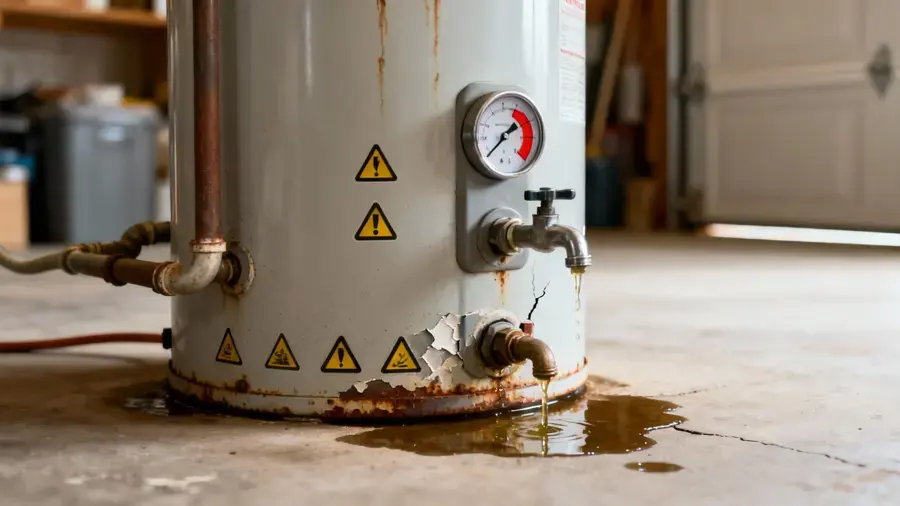
Most tank water heaters last roughly 8 to 12 years. In Chapel Hill they sit in garages, basements, crawl-space closets and, in many two-story homes, upstairs closets or the attic. When the tank rusts through or a fitting fails, the water keeps coming because the tank refills from the cold supply. A tank in an attic or upstairs closet can soak the ceiling and walls below before anyone notices.
Signs a water heater is failing
- Rust-colored water or rust around the base of the tank
- Water in the drain pan or on the floor
- Popping or rumbling sounds from sediment
- A relief valve that drips or discharges
What the cleanup covers
Once the supply is closed and the power or gas is off to the heater, the restoration team handles the water:
- Standing water extracted from the floor and the rooms it reached
- Moisture mapping of the subfloor, nearby walls and the ceiling below
- Baseboards removed and small wall openings made where cavities are wet
- Air movers and LGR dehumidifiers set, with readings logged daily
Upstairs and attic tanks
A tank above living space puts the ceiling and walls below at risk. The drying team checks the ceiling under the tank and every wall the water could have followed down.
Drying and replacement
Replacing the heater is plumbing work. The drying runs alongside it, usually three to five days for a contained loss. Garage and basement floors dry faster than a wood subfloor or a finished ceiling below an attic tank. The U.S. Department of Energy's water heating page explains tank maintenance and replacement, and the EPA WaterSense leak page covers catching leaks early. See also structural drying and ceiling leak water damage.
Where the water heater failure cleanup crews work
The Chapel Hill restoration crew covers the whole town and Carrboro, from Franklin Street, Northside and Glen Lennox to Timberlyne, Southern Village, Meadowmont and Governors Club, across ZIP codes 27514, 27516 and 27517.
See every neighborhood and ZIP codeRelated water damage services in Chapel Hill
Water Heater Failure Cleanup questions from Chapel Hill homeowners
Straight answers about water heater failure cleanup in Chapel Hill and Carrboro.
How do I stop a leaking water heater?
Close the cold water supply valve at the top of the tank, then turn off the breaker for an electric heater or set the gas control to off. If the valve will not close, shut the main.
Is it safe to drain the tank myself?
The water inside can be scalding and the tank is heavy. Many homeowners leave draining to the plumber who replaces it, and focus on stopping the supply and protecting belongings.
How much water can a failed water heater release?
The whole tank, often 40 to 50 gallons, plus whatever the supply line adds until it is shut off. That is enough to reach the next room or the ceiling below.
Is water heater damage covered by insurance?
Sudden tank ruptures are often covered while the heater itself, as a worn-out appliance, usually is not. Coverage depends on your policy, so it is worth checking with your own insurer.
Can the subfloor under the heater be saved?
Subfloor that got wet from a sudden leak can usually be dried in place. Subfloor that stayed wet for weeks from a slow drip may be soft and need replacing.
How long does drying take after a water heater leak?
Usually three to five days for a contained loss. Wood subfloors and ceilings below attic tanks take longer, and equipment stays until the readings say dry.
Water Heater Failure Cleanup in Chapel Hill? Get the drying started today.
Every hour of standing water pushes it deeper into subfloor, drywall and framing. The Chapel Hill drying team works around the clock.